COMPREHENSIVE 40-HOUR MEDIATION TRAINING
Learn the professional mediation process from beginning to end — conflict analysis, communication, intake, negotiation, caucus, problem solving, ethics, resolution, and drafting mediated agreements
REAL-WORLD MEDIATION SKILLS
Go beyond theory with realistic case scenarios, role-plays, mediator language, negotiation exercises, agreement drafting, instructor check-ins, and practical applications designed to help you think like a mediator.
PROFESSIONAL PRACTICE PREPARATION
Prepare to put your training into practice with professional forms, sample agreements, intake tools, checklists, case-management resources, fee and referral guidance, and a roadmap for beginning your mediation practice.
Basic Mediation Training Overview 40-Hour Foundational Course | Certificate of Completion
Course Introduction This foundational 40-hour Basic Mediation Training introduces participants to the core principles, skills, and strategies required for effective mediation. While these student learning objectives reflect industry standards, trainers may incorporate additional topics and exercises to meet participant and organizational needs. Full mastery is achieved through practice and participation in a mediation practicum. Course Objective Upon successful completion, participants will be able to conduct a full mediation session, using proven tools and strategies to manage conflict, facilitate communication, and support voluntary resolution. Core Competencies & Learning Outcomes Intake & Preparation Understand the intake process, including screening disputes for appropriateness. Recognize the additional training and knowledge needed for thorough intake. Learn best practices for co-mediation, including coordination and communication with a co-mediator. Prepare the mediation setting to support effective dialogue and professionalism. Mediator Opening Statement Deliver clear, effective opening statements aligned with ethical standards and mediation practice. Explain confidentiality, privilege, and their exceptions confidently and accurately. Address mandatory reporting obligations while upholding mediator neutrality. Client Opening Statements & Listening Skills Facilitate and summarize parties’ opening statements with neutrality and empathy. Apply active listening, reframing, and feedback techniques to enhance communication. Identify and manage barriers to communication in emotionally charged sessions. Exploration of Conflict Use questioning techniques to uncover core issues, emotions, and underlying interests. Analyze conflicts in depth to inform agenda building and negotiation strategies. Agenda Setting Know when and how to transition into the agenda-building phase. Guide parties in developing a neutral, non-positional agenda that reflects shared concerns. Strategically prioritize agenda items to maintain flow and engagement. Negotiation & Problem Solving Understand negotiation theory (positions vs. interests, BATNAs, WATNAs, etc.). Facilitate interest-based negotiation and manage power dynamics effectively. Address identity, cultural influences, values, and equity considerations. Encourage party-driven resolution while upholding self-determination. Drafting Agreements Assist in drafting clear, balanced, and enforceable agreements. Apply “reality testing” and ethical standards to develop lasting resolutions. Use appropriate documentation tools and agreement templates. Use of Caucus Identify when a caucus is appropriate and use techniques to make it productive. Maintain confidentiality and impartiality during caucuses. Manage transitions in and out of caucus smoothly and transparently. Support engagement from parties not in caucus to maintain momentum. General Professional Skills Reflect on personal conflict style and its impact on mediation practice. Recognize and respond to parties’ verbal and non-verbal communication cues. Maintain emotional awareness and support parties in high-conflict situations. Differentiate mediation from other dispute resolution methods (e.g., litigation, arbitration). Understand ethical principles including confidentiality, voluntary participation, and neutrality. Become familiar with national and state mediator ethics standards and best practices. Learn to identify negotiable versus non-negotiable issues and guide constructive dialogue. Know when and how to appropriately conclude or terminate a mediation session. Course highlights for the 40 Hour Basic Mediation Training: From intake to agreement: A complete overview of the mediation process Observe role plays of each step in the process Demonstrations of advanced techniques and interventions Conflict resolution theory Concrete tools to use in the mediation room Interest-based negotiations skills and strategies Strategic mediation planning Financial issues and parenting plan mediation Dealing with difficult participants Meditation Training Center | Professional Studies Tuition: $499 951-289-5259
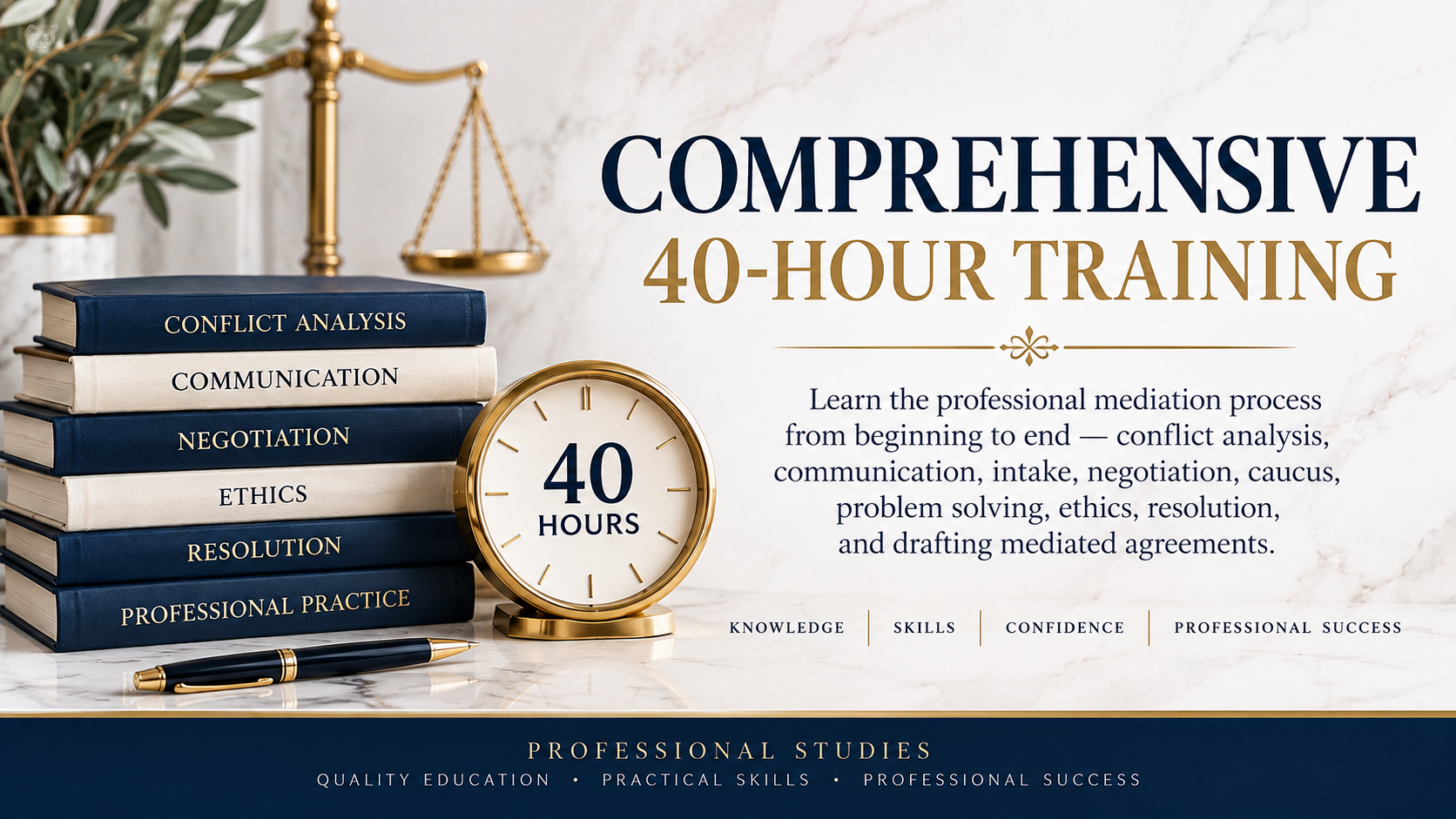
40 Hour Mediation Training
COMPREHENSIVE 40-HOUR MEDIATION TRAINING Learn the mediation process from beginning to end through comprehensive professional training in conflict analysis, communication, case preparation, negotiation, ethics, resolution, and drafting mediated agreements. REAL-WORLD MEDIATION SKILLS Move beyond theory with realistic case scenarios, role-plays, mediator language, negotiation exercises, instructor check-ins, and practical applications that teach you to think like a mediator. PROFESSIONAL PRACTICE PREPARATION Prepare to put your training into practice with professional forms, sample agreements, intake tools, checklists, case-management resources, fee and referral guidance, and a practical roadmap for beginning your mediation practice.
Ready to Begin Your Training?
Join the growing field of mediation and transform your career. Our online training empowers you with skills to earn $150+ per hour! Buy Now, Pay Later options available.
$499.00